

Why Devin Williams Fits Seton Hall's System Like a Glove

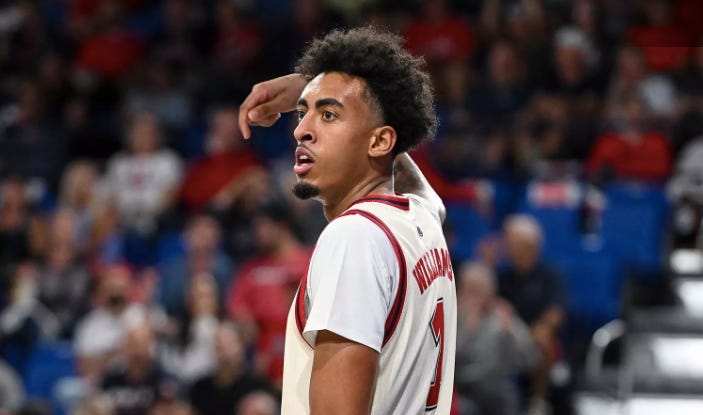
Historically, Shaheen Holloway’s best teams have been defined by their rough-and-tough style and an analytically-defined dominance attributable to several factors — perhaps none more significant than Block Rate.
In his four years at St. Peter’s, the Peacocks had perhaps the most sustained shot-swatting success in the nation, including:
A nation-best 17.7% rejection rate during Holloway’s first year in 2018-19
20th countrywide a year later (13.6%)
Then second (16%) and 12th (14.7%) in his final two seasons at St. Peter’s
Those block rates have translated at Seton Hall as well. The Pirates were 43rd in Block Rate during the 2022-23 campaign (11.9%), 14th a year later (14.2%), 56th in 2024-25 (11.9%), and tops nationally a year ago (18.7%).
Those are fantastic numbers, especially given the higher level of competition in the Big East: the Pirates’ average strength of schedule has ranked 50th nationwide in the four years since Holloway’s return to campus, while St. Peter’s placed 268th during his four years there.
In terms of rim protection, Holloway has never lacked a true enforcer. The run started with KC Ndefo, a three-time MAAC Defensive Player of the Year who averaged 2.5 blocks per game across five seasons spent with St. Peter’s (2018-22) and Seton Hall (2022-23).
Jaden Bediako took the mantle during the Hall’s NIT Championship season in 2023-24, finishing third in the Big East with 61 swats (1.6 per game) and second in Block Rate during conference play (8.4%).
It should come as no surprise that Seton Hall’s 7-25 record overall in the 2024-25 season came without a true shot-blocker on the roster (although Garwey Dual and Godswill Erhereiene — two plus-defenders — were respectable swatters in relation to their minutes).
On the flip side, Seton Hall’s resurgence this past year (21-12 overall and a fourth-place finish in the Big East standings after being picked last in the conference’s preseason poll) came thanks in large part to a return to its defensive roots. The trio of Stephon Payne III, Elijah Fisher, and Najai Hines combined to create a dominant force in South Orange, helping the group to a top-15 placement in adjusted Defensive Efficiency (94.7 points allowed per 100 possessions), 17th in two-point defense (opponents shot 46.4% from inside the arc versus the Pirates, well below the national two-point average of 51.7%), and the top shot-blocking team in the nation (18.7% rejection rate in 2025-26; nearly double the national average of 9.5%).
However, this offseason posed a challenge to the Pirates. Payne and Fisher each graduated, while Hines (a local product who averaged 2.2 swats per game as a freshman) left via the transfer portal. To keep the model alive, the Pirates did what any team must do nowadays: leverage the transfer portal.
That’s what brought Devin Williams to town — and it might be what keeps Seton Hall as one of the nation’s best defensive units once again.
From UCLA to FAU: Devin Williams’ College Journey
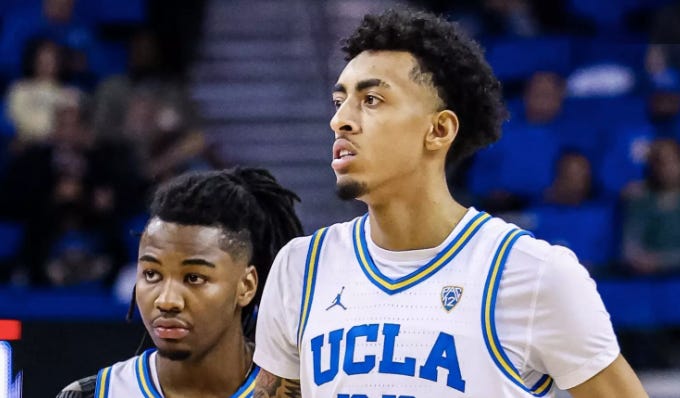
A former top-100 recruit coming out of high school in 2023, Williams, a 6’10”, 210-pound forward from Riverside, California, gives Holloway another brilliant defensive piece to plug-and-play on the low block. After barely playing as a freshman at UCLA in 2024-25 (3.2 minutes per game across 10 contests), he found his footing at Florida Atlantic this past season, averaging 7.5 points, 5.2 rebounds, and 2.6 blocks while starting all 33 games for the Owls.
His 85 total rejections led the American Athletic Conference and ranked 7th in the NCAA, and his blocked shot percentage of 11.4% was another conference-best mark (and 4th across the Division I landscape). Meanwhile, the aforementioned per-game blocked shot mark ranked fifth nationally.
There’s plenty of room for improvement when it comes to Williams’ defensive rebounding capabilities, however. His 13.4% defensive rebounding rate ranked in the NCAA’s 34th percentile last season; that’s a far cry from the success rates that Payne (21.2%) and Hines (19.9%) experienced last year for the Pirates.
Nevertheless, his shot-blocking capabilities are his best feature, and a common factor worth considering is whether a player’s swats are a product of over-aggression (i.e., coming at risk of frequent fouls) or technical skill. In Williams’ case, his 1.9 personal fouls committed per game feel minuscule, especially given his blocks-to-personal-foul rate of 1.37, which ranks in the 99th percentile of all Division I players. In addition, he fouled out of just two contests last year while recording 25 games in which he was called for two or fewer personals.
Offensively, he’s best within three feet of the rim. Williams nabbed 74 offensive rebounds last year, with an offensive rebound rate of 10.2%, ranking in the 72nd percentile. His 2.2 offensive rebounds per game ranked in the NCAA’s 85th percentile, and 25% of his points last year came on second-chance opportunities. Of further intrigue, Williams can also space the floor a little bit, shooting 15-49 (30.6%) from three last year, which may offer an added dimension to the team’s offense. Seton Hall’s five primary frontcourt options combined for fifteen made threes on 65 attempts last year as a unit.
A Look at the Film: Williams as a Shot Blocker and Offensive Player
Below you’ll get a look at just some of Williams’ 80+ blocks at FAU last year. The second reel offers an unfiltered look at Williams on the offensive end — with three minutes of makes, misses, passes, and turnovers mixed in from late in the season.
The Final Verdict:
Once again facing an offseason with a roster that needed to be retooled, Seton Hall made out well. The Pirates added Simeon Wilcher (Texas), Kareem Thomas (Dartmouth), Del Jones (Radford), Roddie Anderson III (Xavier), and Rodney Brown (Loyola-Marymount) to shore up the backcourt, while Abdulai Fanta Kabba (Western Carolina), Chris Nwuli (Rutgers), Mayar Wol (Bowling Green), and Terry Copeland Jr. (Howard College) will fill out the big man unit in South Orange.
But while a need to replace the likes of Payne and Fisher (both of whom have graduated) was always there for Seton Hall at season’s end, the idea of replacing Hines — a highly skilled and imposing force as just a freshman last year — was a loftier task.
Ironically, Holloway and company didn’t just worry about replacing Hines, they needed to figure out how to counteract him, as he’s now an inter-conference foe having committed to UConn via the portal.
The addition of the sturdy Copeland late in the portal may free Williams up to do what he does best — swat shots and clean up inside. Though lean at 210 pounds, he’s an able-bodied big who can ideally provide Holloway a blend of what he likes in his big men: ruthless down low, imposing as a shot-blocker, and rarely in foul trouble.
Enjoying what you’ve seen from The Big East Film Room so far? Help us continue to grow by spreading the word to your network! We’re committed to providing insightful, unbiased, in-depth, and year-round coverage of the Big East.
If you haven’t already done so, please consider becoming a subscriber to help us bring even more great coverage of the league.